Senate of the Kingdom of Italy
The LeopardThe Senate of the Kingdom of Italy is the new state’s proposed upper chamber and, in The Leopard, a test of who will represent Sicily after unification. Its promise of public deliberation and national participation meets Don Fabrizio Corbera, Prince of Salina’s conviction that institutional change will not undo the island’s habits or his generation’s political displacement. He refuses the offered seat and recommends Don Calogero Sedàra instead; a decade later, Sedàra does enter the Senate, turning the episode into a compact portrait of old authority yielding ground to practical power.
The Senate and Its Proposed Role
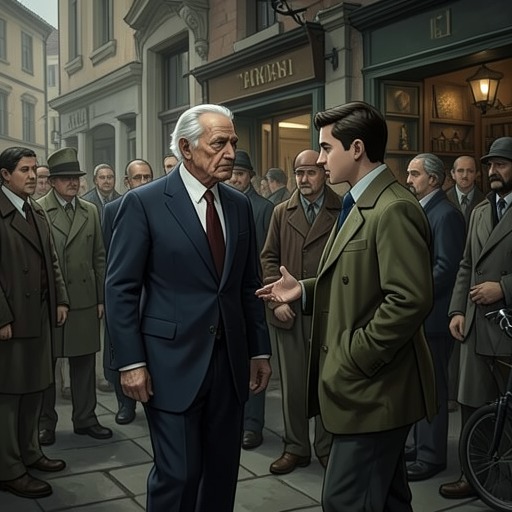
After Sicily’s union with the Kingdom of Sardinia, the Turin Government seeks distinguished Sicilians for nomination as senators. Provincial authorities draw up a list for the central government to examine before royal appointment. The proposal reaches Don Fabrizio through Cavaliere Aimone Chevalley di Monterzuolo, who has been sent in person to ask whether the Prince will accept. His name, Chevalley explains, has been advanced for his antiquity, personal standing, scientific distinction, and conduct during recent political events.
Chevalley describes the Senate as the Kingdom’s high chamber: its members would examine and debate government bills, approve or reject them, and serve as both spur and brake on public action. In his account, the institution would give Sicily a voice alongside the other representatives of the country and help address its wounds and unfulfilled claims. The appeal is therefore more than a personal honor. It presents the new Senate as a mechanism for national legislation and as a means of incorporating Sicily into the political life of the newly united state.
The institution’s newness is important to the exchange. Don Fabrizio says that information about other Italian constitutional systems had not been available in the newspapers under the previous monarchy, and a brief visit to Turin had not taught him enough to understand the Senate’s functions. He asks whether the position is merely an honorific title or carries legislative and deliberative responsibilities. His uncertainty is not simply a lack of knowledge: before considering service, he wants to know what kind of power the new office represents.
An Offer Between Two Political Orders
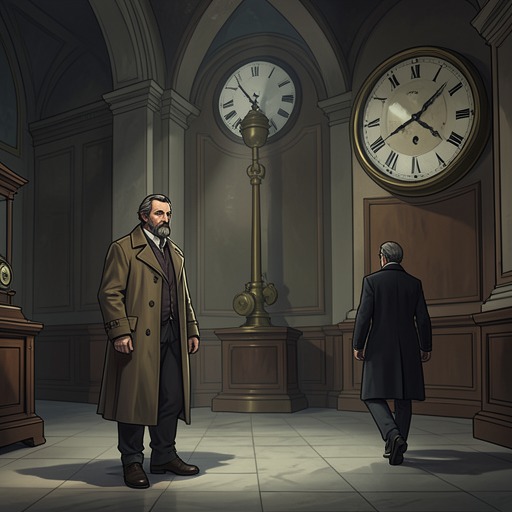
The Senate invitation arrives against the memory of the royal system that preceded it. Don Fabrizio recalls audiences with Ferdinand II of the Two Sicilies, where courtly familiarity could shift into sovereign threat and a conversation about family or science could turn into an attempt to elicit political information. He had declined to act as an informant about the Lieutenant-General of Sicily. Leaving the palace, he wondered whether the succeeding order would differ in substance from the monarchy, or merely exchange Neapolitan speech for the dialect of Turin. His distrust of political succession thus precedes the Senate offer: a change in offices and ruling language does not, to him, guarantee a change in how authority is exercised.
Don Fabrizio also has a Palermo precedent in mind. He remembers a senate there, but regards it as little more than a committee of civil administrators, an office he considers beneath a Salina. His historical comparisons are broader still: thoughts of the Roman Senate, an imperial senate in Paris, and the Palermo body make the title difficult for him to separate from its actual functions. These comparisons leave him wary of both prestige without substance and institutions whose names conceal limited or compromised authority.
His response is not an absolute rejection of the new state. He allows that he might accept a seat if it were simply an honor to acknowledge, and he recognizes a public duty to avoid appearing disunited at a decisive moment. But Chevalley has described a working legislative chamber, not a decoration for a visiting card. Don Fabrizio imagines himself among a generation caught between the old order and the new, compromised by its association with Bourbon rule and ill at ease in either world. He doubts that an inexperienced legislator without the capacity for self-deception could effectively guide others, and believes that younger politicians are better suited to the new moment.
Refusal and the Recommendation of Sedàra
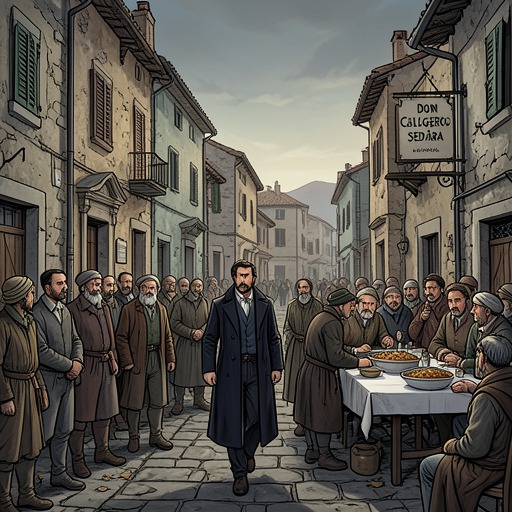
Don Fabrizio’s refusal does not leave the question of Sicilian representation unanswered. He proposes Don Calogero Sedàra, judging him better fitted for the Senate than himself. The Prince’s reasoning is pointed: Sedàra has power as well as prestige, practical rather than scientific accomplishments, and a record during the May crisis that was actively useful to the new authorities. Don Fabrizio also considers him politically astute enough to produce public ideals when they are needed, even if he shares the Prince’s lack of illusions. Because Sedàra is considering a run for the Chamber of Deputies, Don Fabrizio urges Chevalley to act quickly.
The recommendation reflects a relationship built on mutual scrutiny as well as political calculation. Don Fabrizio sees Sedàra as a representative of a rising class: a local figure who can turn influence, business, and political access into advancement. Sedàra, in turn, has described the coming order in terms of practical benefits such as liberty, security, lighter taxes, and trade, while reassuring the Prince that established households will remain safe. Don Fabrizio recognizes the self-interest behind such assurances, yet also understands that the new political system may find useful precisely the skills and local power that the old aristocracy regards with suspicion.
Chevalley, an honest supporter of the legislative chambers, is startled by the nomination. He knows of Sedàra’s public and private activities, but does not challenge the Prince’s proposal. The narrative later confirms its consequence: ten years afterward, Don Calogero does gain a seat in the Senate. The appointment makes the exchange more than a polite refusal. Don Fabrizio withdraws from the institution while directing its attention toward a man whose practical influence better fits the emerging political order.
Political Meaning and Narrative Significance
The Senate is shown through a mission, an explanation, and a refusal rather than through its proceedings. Its stated constitutional purpose is deliberation on legislation, but the route to membership also depends on provincial recommendations, central review, royal appointment, and personal approaches to influential figures. The episode holds formal institutions beside the networks that help populate them. Chevalley arrives as an official messenger; Don Fabrizio answers by using his social judgment to recommend a candidate; Sedàra’s local influence becomes national political standing.
That process does not simply replace one class with another. Don Fabrizio’s name and old prestige make him a plausible candidate, but he declines the role; Sedàra, whose practical power marks him as a rising figure, eventually occupies it. The transfer suggests that the new order can admit new men without necessarily overturning the underlying competition for influence. Don Fabrizio’s skepticism about change therefore coexists with a perceptive understanding of who is likely to benefit from it.
The Senate’s significance lies in this double image: an institution described as a forum for national legislation and Sicilian representation, and an arena whose new members are selected through political judgment, established standing, and usable power. Don Fabrizio will not claim a place in it, but his recommendation helps identify the kind of figure the changing state can absorb. The Senate marks a real institutional transition, while the episode leaves open how far that transition will alter the habits of rule.